
Post 16
Understanding Our Learners at Talbot
Understanding the different pathways and how we support every student to flourish
Post‑16: Pathway to an Enriched Adult Life(Aligned with Pathway 1 – Learners with Complex and Profound Needs)
Students on the Enriched pathway are young people with profound and multiple learning disabilities, often alongside significant health, mobility and sensory needs. They continue to be at the earliest stages of communication and development and require a highly personalised, nurturing environment where they feel safe, comfortable and ready to engage. Their curriculum focuses on rich, multisensory experiences that promote wellbeing, early communication and meaningful interaction with the world around them.
These learners rely on trusted adults who understand their cues, sensory preferences and individual rhythms. Staff work closely with therapists to support movement, positioning, regulation and alternative communication. Through consistent relationships and attuned support, students develop early anticipation, engagement and independence at a pace that reflects their unique needs.
In Post‑16, the emphasis is on quality of life, communication, health and participation in the community. Learning is embedded in everyday routines, sensory exploration, therapeutic input and experiences that build familiarity, comfort and connection. Students are supported to make choices, express preferences and engage in activities that enrich their lives and promote dignity, autonomy and joy. Preparation for adulthood focuses on maximising each student’s ability to communicate, participate and experience the world as fully as possible.
Post‑16: Pathway to a Supported Adult Life (Aligned with Pathway 2 – Learners with Complex Learning and Communication Needs)
Students on the Supported pathway have complex learning disabilities, often combined with social communication differences and sensory processing needs. They are developing early functional communication and benefit from structured, low‑arousal environments that help them regulate, explore and connect with others. Their learning continues to be rooted in exploration and interaction, with activities designed around their interests and motivations.
These learners communicate through a range of personalised systems, including gestures, actions, facial expressions, symbols or emerging speech. They are developing early life skills, emotional regulation and confidence in forming relationships.
In Post‑16, the curriculum focuses on functional communication, independence within supported contexts, community participation and developing personal autonomy. Students learn through real‑life experiences such as shopping, introductory travel training, community visits and transition activities. They practise routines that build independence; preparing snacks, organising belongings, making choices, and develop the confidence to interact with others in familiar settings. Preparation for adulthood emphasises supported decision‑making, emotional wellbeing, communication and the development of meaningful relationships.
Post‑16: Pathway Towards an Independent Adult Life (Aligned with Pathway 3 – Learners with Severe Learning Disabilities)
Students on the Towards Independent Adult Life pathway are young people with severe learning disabilities who bring a wide range of strengths, personalities and aspirations. Many also experience differences linked to autism, ADHD, physical or sensory needs, or social and emotional development. They benefit from clear, predictable routines and environments that celebrate their achievements, support their wellbeing and help them build the skills they need for their future.
These learners generally understand familiar instructions and expectations and can usually form social connections with peers and adults, though they may need support to do so confidently. They are developing independence, functional communication, social understanding and emotional regulation. They thrive with structure, real‑life learning opportunities and experiences that build confidence and resilience.
In Post‑16, the curriculum focuses on independent living skills, community engagement, functional literacy and numeracy, work‑related learning and preparation for future destinations. Students take part in activities such as travel training, enterprise projects, independent living skills, leisure, community participation and transition programmes. They learn to manage routines, navigate social situations and make informed choices about their lives. Preparation for adulthood is ambitious and forward‑looking, supporting students to develop the skills, confidence and self‑advocacy needed for the next stage.
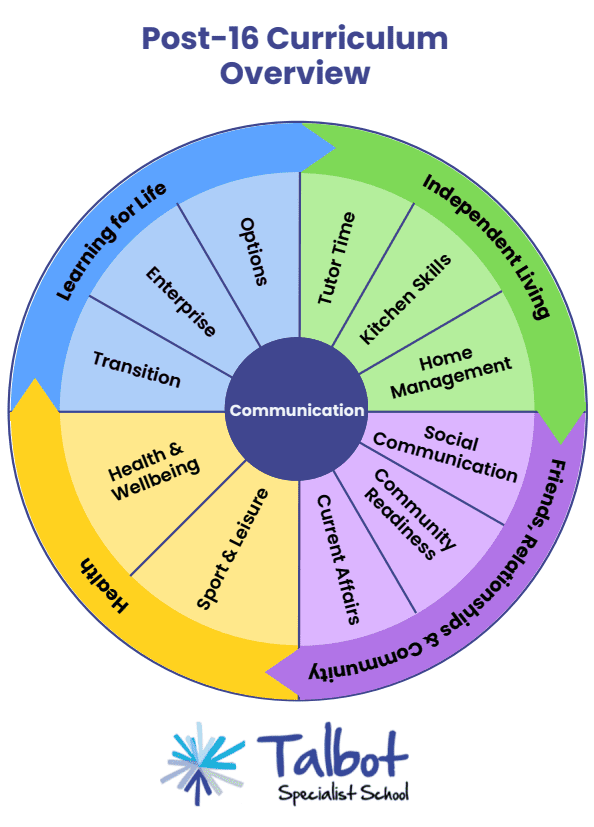
Post-16 Curriculum Overview
The curriculum is built around the Preparation for Adulthood framework, focusing on four key areas and ten subject areas to support learners’ transition into adult life. It emphasises practical, real-world skills and embeds core competencies like communication, English, and maths to help learners develop independence, social interaction, and safe engagement with the world.
| PfA Pillar | Subject Area – INTENT / Core Focus | Autumn Term | Spring Term | Summer Term |
| Learning For Life | Options – Developing awareness of future life pathways through exploring work-related skills, community opportunities, and day provision activities, while building independence, participation, and understanding of personal strengths and preferences | Awareness of work, safety & following instructions | Developing work skills and teamwork | Planning, reflection, and vocational showcase |
| Enterprise – Developing work-related skills through enterprise activities, including teamwork, responsibility, quality, communication, and practical money skills, while building understanding of how products and services are created and shared. | Engagement & safety in workplace routines | Production, quality control, and money handling | Showcase, sales, reflection, and responsibility | |
| Transition – Preparing learners for next steps by developing confidence and independence in navigating different environments, moving between spaces safely, understanding how to stay safe in public, and communicating their needs and preferences | Awareness of change, strengths & preferences | Preparing for new environments and next steps | Reflection, goal-setting, and transition celebration | |
| Independent Living | Kitchen Skills – Developing cooking skills through structured teaching of hygiene, safety, and routines, progressing towards independence in preparing food and completing kitchen tasks. | Engagement & safety routines; building confidence with kitchen tools | Meal planning, choice-making, and healthy preparation | Independence, healthy lifestyles, reflection and celebration |
| Home Management – Developing domestic skills to manage a home environment safely and independently, including cleaning, organisation, and responsibility for routines. | Household routines, cleaning, laundry, safety | Using appliances, scheduling and responsibility | Independence, home safety, showcase and pride | |
| Friends, Relationships & Community
|
Social Communication – Developing communication and social skills to build relationships, understand emotions, and interact with others, including developing tolerance, respect, and understanding of difference | Awareness of others, greetings, and emotions | Friendship, teamwork, and cooperation | Respect, consent, and reflection of relationships |
| Community Readiness – Building confidence and independence to access the community safely, developing travel skills, participation, and social responsibility. | Engagement, safety, and familiarisation | Participation, teamwork, and independence in community | Planning, responsibility, and celebration | |
| Current Affairs – Developing awareness of the wider world through current events, supporting communication, opinion, and understanding of citizenship, diversity, and difference. | Awareness of local/world events; fairness & feelings | Diversity, inclusion, and media awareness | Citizenship, rights, and reflection | |
| Health | Health & Wellbeing – Developing physical, emotional, and social wellbeing through self-care, therapeutic support, emotional regulation, relationships, and healthy lifestyle choices | Engagement & healthy routines; body awareness & growing up | Emotional regulation, relationships, and healthy lifestyles | Puberty, independence, and wellbeing reflection |
| Sport & Leisure – Promoting physical health through participation in sport and leisure activities, developing fitness, teamwork, and independence in making active and purposeful leisure choices. | Engagement & routines; following safety rules | Skill development, teamwork, and confidence | Planning, leadership, and celebration |
Related Pages
Primary ICT Support Copyright © 2026 Talbot Specialist School
All Rights Reserved