
Pathway 3
Understanding Our Learners at Talbot
Understanding the different pathways and how we support every student to flourish
Year 7-11: Pathway 3 – Learners with Severe Learning Disabilities
Students in Pathway 3 are young people with severe learning disabilities who bring a rich mix of strengths, personalities and individual needs. Many also experience differences linked to autism, ADHD, physical or sensory needs, or social and emotional development. They may use speech, sometimes alongside communication aids, and benefit from clear, predictable routines. They are individuals with emerging identities, interests and aspirations who flourish in environments that celebrate their achievements, support their wellbeing and help them build the skills they need for their future.
These learners generally understand familiar instructions and daily expectations and can usually form social connections with peers and adults, though they may need support to do so confidently. They respond well to nurturing staff who take time to build trusting relationships, helping them feel safe, understood and ready to engage.
They develop skills in their own way and at their own pace. They show curiosity, thrive with structure and enjoy opportunities that relate to real‑life experiences. Many are developing their independence, functional communication, social understanding and emotional regulation. They may need help managing attention, transitions or social situations, but with sensitive support they show growing resilience and confidence.
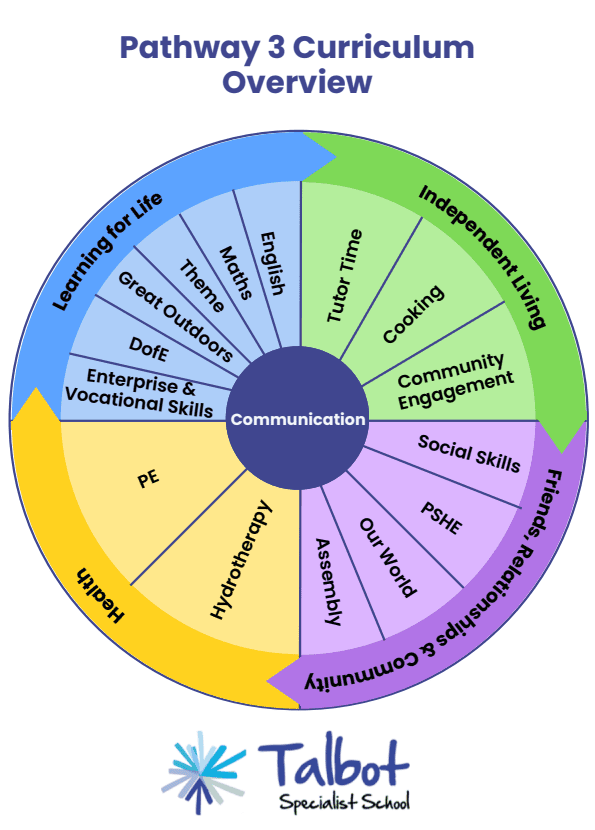
Pathway 3 Curriculum Overview
The intent of Pathway 3 is to prepare students for adulthood by enabling them to confidently learn, use and apply functional academic, social and life skills, fostering independence, self‑advocacy and active participation in their community and future pathways.
| PfA Pillar | Subject Area – INTENT / Core Focus | Autumn Term
Make Your Mark |
Spring Term
Living Planet |
Summer Term
On The Move |
| Learning for Life
|
English – Functional communication, reading and writing for everyday life, travel, choice‑making and future pathways. | Build confidence in communication through speaking, listening and early functional reading and writing. | Apply reading, writing and communication skills in topic‑based and real‑life contexts. | Use functional literacy independently for journeys, choices and everyday communication. |
| Maths – Practical use of number, time, measure and money to support independence. | Develop secure number recognition, counting and early money skills for everyday use. | Apply measuring, data and money skills through practical and environmental contexts. | Use time, money and problem‑solving skills to support travel, planning and independence. | |
| Thematic Learning – Integrated curriculum developing enquiry, creativity and problem‑solving through meaningful real‑life contexts. | Explore creativity and design through movement, materials and purposeful making. | Investigate the natural world through science, geography and sustainable art. | Apply knowledge through learning about transport, places and journeys past and present. | |
| The Great Outdoors – Hands‑on outdoor learning building practical skills, responsibility, teamwork and environmental awareness. | Explore outdoor spaces and learn how to care for shared environments. | Develop planting skills and understanding of nature and seasonal change. | Grow, harvest and maintain outdoor areas with increasing independence. | |
| Duke of Edinburgh (DofE) – Resilience, teamwork and independence through volunteering, skills and expeditions. | Develop teamwork and independence through camping skills and volunteering. | Build confidence by learning and practising new personal and practical skills. | Apply skills during expeditions and challenge activities. | |
| Enterprise & Vocational Skills – Early employability skills including teamwork, responsibility and money through practical enterprise activities. | Explore enterprise through role‑play, teamwork and communication. | Develop practical vocational skills through supported workplace activities. | Apply skills by planning and running simple enterprise projects. | |
| Independent Living
|
Tutor Time – Routines, relationships and progress towards EHCP outcomes. | Establish routines, positive relationships and progress towards EHCP outcomes. | Strengthen independence, engagement and personal targets within themed learning. | Build confidence and readiness for new experiences and transitions. |
| Cooking – Food preparation, safety, hygiene and healthy living with increasing independence. | Learn basic kitchen safety and simple food preparation skills. | Prepare simple meals and develop independence with tools and routines. | Plan, prepare and adapt meals with increased independence. | |
| Community Engagement – Application of literacy, numeracy and communication skills in real‑life settings, including local travel. | Learn safe routines and confidence when moving around familiar environments. | Travel locally using supported transport and explore natural spaces safely. | Apply travel and social skills in wider community visits and new settings. | |
| Friends, Relationships & Community
|
Social Development – Communication, friendships, teamwork and emotional understanding through shared interests and activities. | Develop communication, friendship, teamwork and emotional understanding through shared activities and interests i.e through bikes, media, board games, film, reading, hiking, music making, listening to music, swimming | ||
| PSHE (Relationships & Citizenship) – Wellbeing, respectful relationships, personal safety, emotional regulation and decision‑making. | Learn about respectful relationships, wellbeing and staying safe. | Understand changing bodies, health and personal safety with appropriate support. | Develop knowledge of physical health, healthy choices and risk awareness. | |
| RE – Understanding beliefs, values and cultures to promote respect and tolerance. | Explore belonging, beginnings and celebrations across faiths. | Learn about faith, nature, places of worship and key beliefs. | Understand journeys, routines and rules within different belief systems. | |
| Assembly – Shared values, belonging and personal development within the school community. | Celebrate individuality, belonging and positive choices. | Focus on caring for the environment and shared responsibility. | Explore journeys, independence and preparing for new experiences. | |
| Health
|
PSHE (Health) – Physical health, healthy choices, risk awareness and self‑care. | Learn about respectful relationships, wellbeing and staying safe. | Understand changing bodies, health and personal safety with appropriate support. | Develop knowledge of physical health, healthy choices and risk awareness. |
| PE – Physical confidence, coordination, teamwork and participation in inclusive activities. | Develop fundamental movement skills and teamwork. | Improve coordination, fitness and participation in adapted sports. | Apply physical skills through athletics, games and outdoor activities. | |
| Swimming – Water confidence, safety and basic swimming skills. | Develop water confidence and basic safety skills. Build swimming technique and personal confidence. Apply swimming skills independently and safely. | |||
Related Pages
Primary ICT Support Copyright © 2026 Talbot Specialist School
All Rights Reserved