
Pathway 2
Understanding Our Learners at Talbot
Understanding the different pathways and how we support every student to flourish
Year 7-11: Pathway 2 – Learners with Complex Learning and Communication Needs
Students in Pathway 2 have complex learning disabilities, often combined with social communication differences and sensory processing needs. They are developing early communication skills and learn most effectively through exploration, interaction and play that aligns with their interests and motivations.
Many Pathway 2 learners communicate through actions, gestures, facial expressions or emerging speech, supported by personalised communication systems. They benefit from structured, low‑arousal environments that help them regulate, explore and connect with others. Staff use approaches such as Attention Autism, Intensive Interaction and sensory stories to support shared attention, communication and engagement.
These students are beginning to build functional communication, independence and emotional regulation. With consistent, responsive support, they grow in confidence, develop early life skills and deepen their ability to form relationships and interact meaningfully with their surroundings.
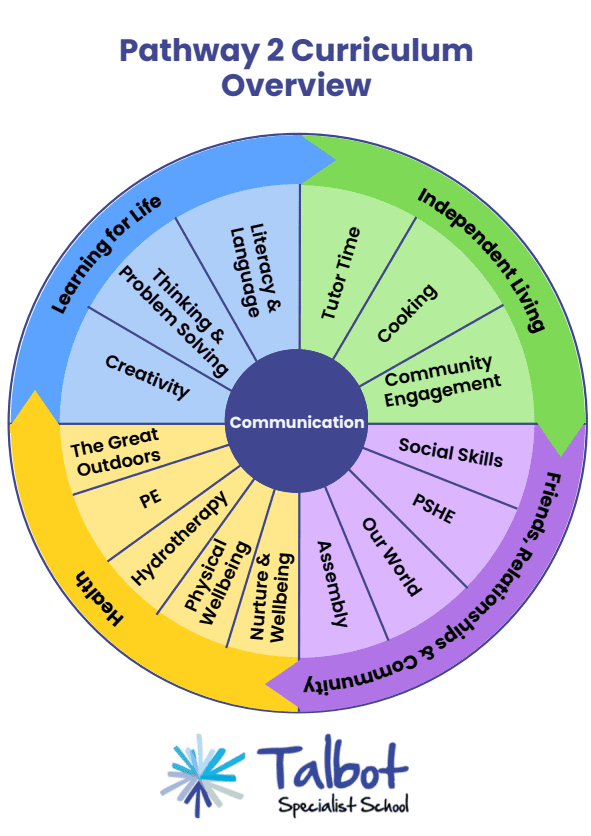
Pathway 2 Curriculum Overview
The intent of Pathway 2 is to develop functional communication, early literacy and numeracy, and growing independence through structured, practical learning that supports confidence, participation and application of skills in familiar and real‑life contexts.
| PfA
Pillar |
Subject Area – INTENT / Core Focus | Autumn Term
Make Your Mark |
Spring Term
Living Planet |
Summer Term
On The Move |
|||
| Learning for Life | Literacy & Language- functional communication and early literacy skills so students can make choices, express needs, follow routines, and interact in familiar contexts. | Develop attention, listening and early communication through structured activities and supported interaction. | Develop communication using symbols, sounds and early phonics within thematic based learning. | Apply communication skills across routines, peers and unfamiliar situations. | |||
| Thinking & Problem Solving – Build early maths skills through practical experiences for everyday problem solving. | Explore comparison, shape, space and measure through practical activities. | Develop understanding of pattern and early counting within familiar routines. | Apply counting, ordering and early number concepts to real‑life situations. | ||||
| Creativity – Develop curiosity, self‑expression and imagination that promote shared interaction | Explore materials and mark‑making through art and music. | Develop movement, rhythm and creative choices through dance and art. | Use drama, music and art to express ideas and experiences. | ||||
| The Great Outdoors – Build engagement and respect for the natural environment through hands-on outdoor learning. | Explore outdoor environments and seasonal changes. | Use natural materials and tools to investigate and create. | Participate in outdoor challenges that build confidence and teamwork. | ||||
| Independent Living | Tutor Time – Develop belonging, wellbeing, independence and readiness for learning through predictable routines. | Establish consistent routines, transitions and emotional regulation. | Increase independence within routines and awareness of time and expectations. | Apply routines confidently and prepare for change and transition. | |||
| Cooking – Develop functional cooking skills, promoting independence, safety and healthy choices. | Explore basic food preparation and simple tools safely. | Develop confidence using equipment and following supported processes. | Apply cooking skills by following simple recipes. | ||||
| Community Engagement – Develop confidence, safety awareness and participation skills within familiar community settings. | Explore the school community and begin to understand belonging by celebrating the country and community. | Engage with the local community through supported visits and experiences. | Travel and participate within the community. | ||||
| Friends, Relationships and Community | Social Skills – Develop social interaction, emotional understanding and confidence. | Engage in shared play experiences, indoors and outdoors, where adults model, scaffold and support positive interaction. | |||||
| PSHE – Develop understanding of self, relationships, safety and wellbeing (inc. RSE) | Build self‑awareness and understanding of personal needs. | Develop emotional regulation, self‑care and understanding of change. | Learn about healthy choices and the wider world. | ||||
| RE – Explore beliefs, values and communities through sensory and experiential learning. | Across the year students explore celebrations, learn about different faiths and communities. | ||||||
| Hinduism | Christianity | Islam | Judaism | Buddhism | Sikhism | ||
| Assembly – Creating memories, promote belonging, respect and shared celebration. | Forming friendships | Making choices | Learning beyond the classroom | ||||
| Health | PE – Develop gross motor skills, coordination, physical wellbeing and mobility. | Build movement skills and confidence through structured physical activities. | Develop strength, balance and fitness through varied activities. | Apply physical skills through games, athletics and life‑skills‑focused activities. | |||
| Hydrotherapy – Develop water confidence, regulation, safety and physical comfort. | Develop communication, body awareness, and relaxation to support wellbeing. | ||||||
| Physical Wellbeing – Promote enjoyment of physical activity and resilience. | Explore movement and rhythm through guided activities. | Develop regulation through sensory and calming activities. | Build stamina and confidence through outdoor physical activities. | ||||
| Nurture & Wellbeing – Support emotional wellbeing, self‑awareness and resilience. | Explore calming and regulating activities. | Develop connection through sensory and nature‑based experiences. | Use movement and music to express emotions and build confidence. | ||||
Related Pages
Primary ICT Support Copyright © 2026 Talbot Specialist School
All Rights Reserved